Needville, TX
(281) 750-1881

Needville, Texas. Since 1986.

Fifteen minutes, not three days.

Your coolant is either growing something or it isn't, and a plate count tells you which one three days after it mattered. The HMB X reads the biological activity in your sump while you stand at the machine.

Call (281) 750-1881

Every number here has another number behind it

We only claim things that can be measured against the thing they replace.

15 min24 to 72 hours

Time to a usable reading. The HMB reaction happens at enzyme speed, so the answer arrives while the shift is still running.

3%about 30%

Published precision. Biochemical activity testing against the growth-plate method, whose colony counts are estimates with a wide published spread.

Dayshours

Your window to redose. A depleted biocide gives you hours before the bloom. Mark II declines slowly and recovers slowly, which is the whole point of it.

1986since

Building the same two products out of Needville, Texas, and answering the phone ourselves the entire time.

20countries

Shops running BioTech testers and stabilizer, across the Americas, Europe and Asia.

10 yrper sump load

How long some customers on the full program have gone without a wholesale disposal of their fluid.

The instrument

Everything you need to read a sump, and nothing you need a laboratory for.

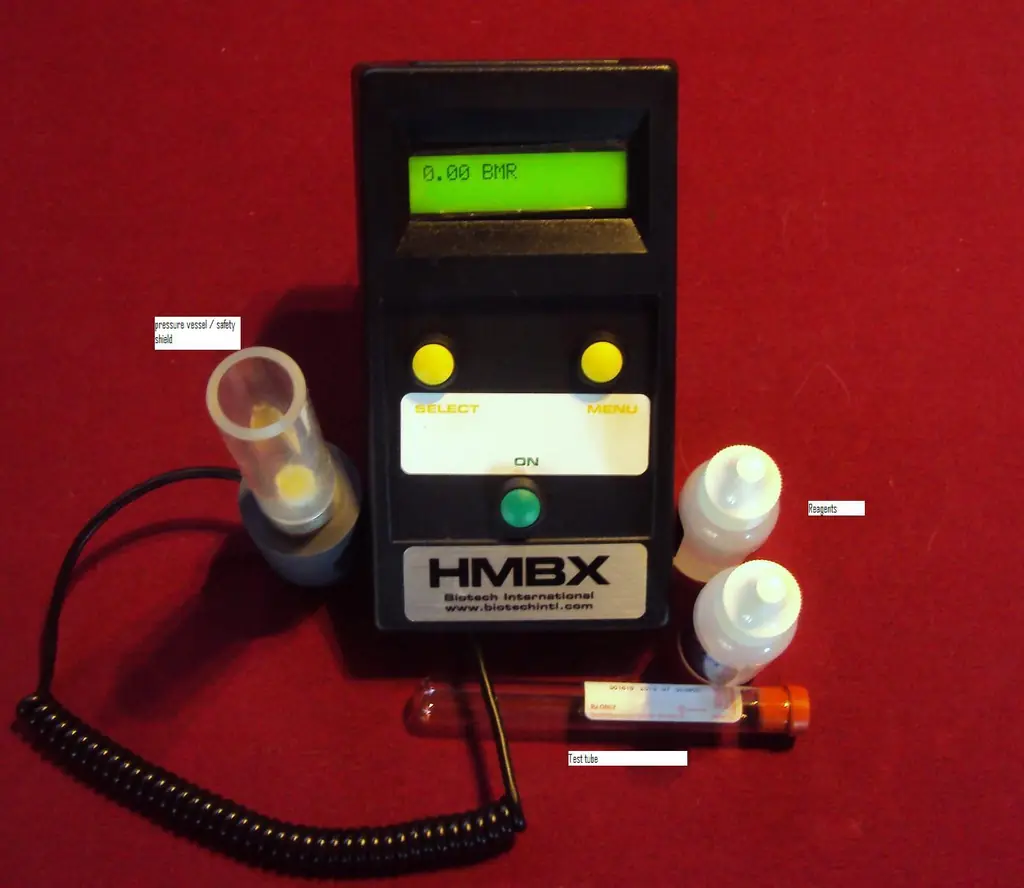
The HMB X is built to be used by people with little or no laboratory experience. Take the sample, add the reagent, read the biomass range off the display.

The BioTech HMBX handheld biological tester with its reagent bottles, sample tube and pressure vessel

Biocide against stabilizer

One of these is a sawtooth. The other is a sine wave you can plan around.

Plot the microbial population of a sump over a year and the two approaches do not look remotely alike. That difference is not cosmetic. It is the difference between redosing on a calendar and redosing on an emergency.

A sawtooth trace: population climbs steeply, is cut down by a biocide dose, then blooms back, repeatedly and with extreme highs and lows.
Biocide. It kills, and it is consumed killing. Every dose is a crash, every depletion is a bloom, and your window to catch the next one is measured in hours.
A shallow horizontal sine wave: the population stays within a narrow band with no extreme highs or lows.
Mark II Stabilizer. Nothing gets killed, so nothing crashes and nothing blooms. The population drifts down by attrition and drifts back just as slowly. No extremes is what lets the fluid run on and on.

Biocides usually go in continuously, daily or weekly, and a program controlling both bacteria and fungi normally needs a bactericide and a fungicide together. Mark II is effective against both and, if it is needed at all, goes in monthly or bimonthly. Many fluid manufacturers build it into their own formulations so there is nothing to add at the tank at all. How the stabilizer works.

The Zero Waste program

Test it, filter it, get the tramp oil off, then stop it growing.

Four things in that order, run around whatever coolant you already buy. It is not complicated and it is not new. It is just done consistently, which is the part most shops never get to.

Test

Real time, so a rise is something you act on rather than something you find out about after it has already cost you a sump.

Filter

Solid particles, the dirt and fine metal that wreck coolant performance and give microbes somewhere to live. Filter matched to your setup.

Tramp oil

Honestly, our filters do not do this. Skimming needs access to the top of the sump and plenty of machines do not offer it. We will tell you what to buy.

Stabilize

Mark II holds the level down instead of knocking it down. That is what turns a fluid change into something you stop scheduling.

The claims we make for it are exactly these six, and no others: never have rancid coolant, save on labor, extend tool life significantly, eliminate disposal of liquid derived from coolant, mitigate coolant associated health problems, reduce chemical purchases. What the program involves.

Straight answers

We do not sell coolant and we do not make skimmers.

Both of those are things we could plausibly sell you and do not, which is why our advice on fluids and on oil removal is worth something. When a skimmer is what you need, we will look at your configuration and point you at someone else's equipment.

Trading since

1986

Trading since

Countries in service

~20

Countries in service

To a biological reading

15 min

To a biological reading

Published test precision

±3%

Published test precision

Before you call

The questions machine shops actually ask us.

It works with virtually any coolant in use today. BioTech does not sell coolant, which is the point: there is nothing to steer you toward. The company keeps a database of what is on the market and will tell you plainly which fluids are better than others when you ask, then works the program around whatever is already in your sumps.

Not entirely, and it is worth being straight about why. Skimming tramp oil needs access to the top of the sump, and a great many freestanding machines and self-contained reservoirs simply do not offer it. BioTech does not make skimmers. The filters are built to pull out solid particles, the dirt and fine metal that kill coolant performance and give microbes somewhere to live. If you need a skimmer, BioTech will look at your setup and point you at someone else's equipment that fits it.

Less than you are spending now, even if you believe you are currently doing nothing. The full claim is deliberately specific: never have rancid coolant, save on labor, extend tool life significantly, eliminate disposal of liquid derived from coolant, mitigate coolant associated health problems, and reduce chemical purchases.

A biocide kills, and is consumed doing it. When the concentration falls below the effective level you get a bloom, a burst of fast growth, and your window to redose is measured in hours. A stabilizer does not kill anything. The organisms simply will not grow in its presence, so the population falls away slowly by attrition over days, and recovers just as slowly. That gives you a redose window measured in days instead of hours.

It is not the same measurement, and that matters more than the speed. A plate count estimates how many organisms are present, to a published precision of about thirty percent. The HMB test measures how much biological activity is happening right now, by reading the peroxidase enzymes aerobic organisms produce while metabolizing, to a precision of about three percent. Both are useful and they are often complementary, but only one of them tells you something before the shift ends.

Needville, Texas

Call.

Forty years of doing this, and it still starts the same way. Tell us the fluid, the machines, and what has gone wrong with it. (281) 750-1881, and a person picks up.