Activity vs Counts: What a Plate Count Actually Tells You
Two shops running the same coolant can get two different answers depending on which test they ran, and neither one is wrong.
September 3, 2026 · 4 min read
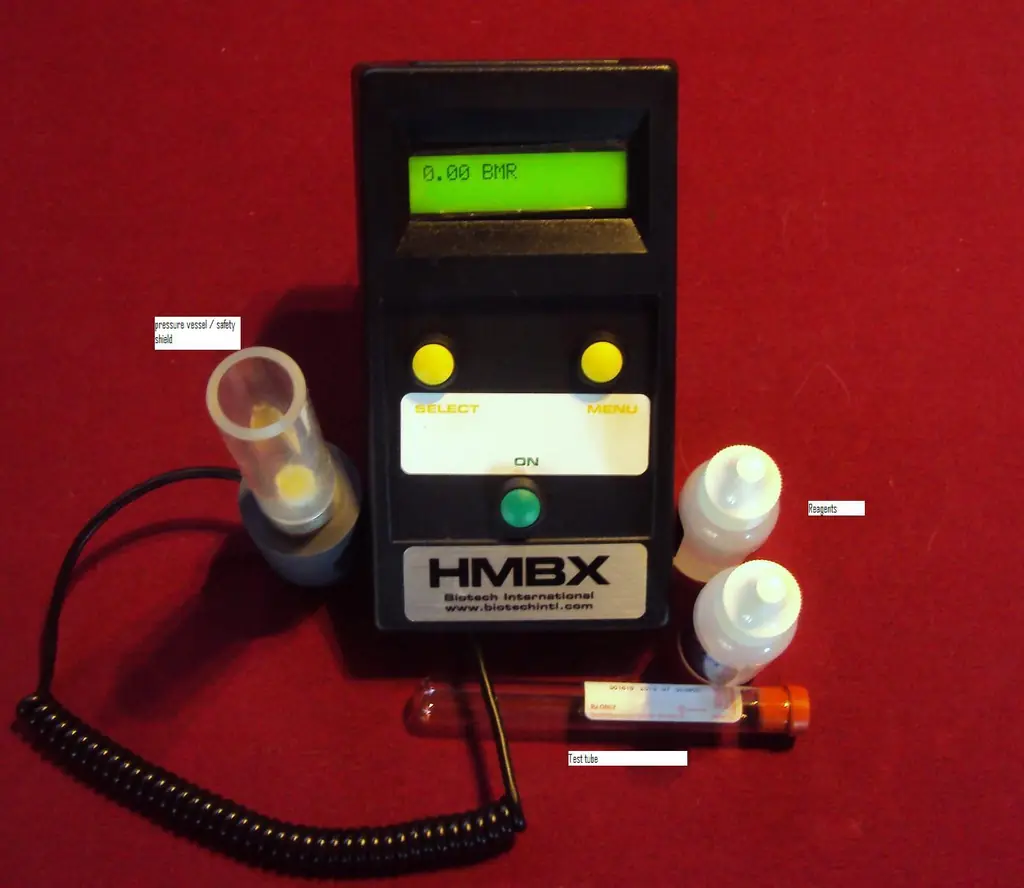
Two shops can run the identical coolant, on the identical machine, and get two different answers depending on which test they ran. That's not a contradiction. It's because "how many organisms are here" and "how active are they right now" are two different questions, and most conversations about coolant testing quietly treat them as the same one.
The traditional method for checking microbial contamination in a sump is a plate count, sometimes called a growth or culture count. You take a sample, dilute it, spread it on a growth medium, and wait for colonies to form so you can count them and report a result in colony-forming units per milliliter, or CFU/mL. It's a real measurement and a well understood one. The catch is time: colonies typically need twenty-four to seventy-two hours to grow out enough to count.
What "activity" measures instead
BioTech's HMB X takes a different approach, built around measuring biological activity rather than counting organisms. Aerobic organisms produce peroxidase enzymes while they metabolize, in proportion to how active they are. The HMB reagent reacts with that peroxidase and produces oxygen, and the instrument reads that oxygen and converts it into what BioTech calls a Biomass Range, or BMR. The whole process takes about fifteen minutes, not days.
The stated precision is worth noting on both sides: BioTech puts the HMB method at roughly plus or minus three percent, against roughly plus or minus thirty percent for growth-method counts. That gap comes from a real difference in method, a direct chemical reaction read on the spot versus colonies that grow, or don't grow for reasons that have nothing to do with the sump, on a plate over days.
Neither number replaces the other
Here's the part worth being honest about. A count and an activity reading are not the same measurement, and treating them as interchangeable is where a lot of sump monitoring goes wrong. Both are useful. Both are, often, complementary. But in any given system there may or may not be a useful correlation between the two, and assuming there always is one is the mistake, not the fix.
A CFU/mL number tells you how many organisms were present in the sample at the moment it was taken, once the colonies had time to grow. It's a snapshot from several days ago by the time you read it. A BMR reading tells you how metabolically active the population is right now, in the fluid, today. Neither one is the real number that the other is a rough approximation of. They're answering different questions, and a maintenance program that only asks one of them is missing half the picture.
For day-to-day sump monitoring, activity is usually the more actionable number, because it tells you what's happening now, while a decision is still cheap to make. A count still has its place, particularly where a documented CFU/mL figure is the reporting standard a customer or process expects. The mistake is picking one and assuming it tells you everything the other would.
Why the wait matters more than it seems
Three days is a long time in a working sump. A population that was manageable on Monday can be well past manageable by Thursday, and a plate count started on Monday won't tell you that until the damage is already visible. Bacterial contamination in metalworking fluids is associated with offensive odors, corrosion, reduced tool life, and operator health concerns, and every one of those problems compounds while you wait for colonies to grow.
BioTech designed the HMB X to be used by someone with little or no laboratory experience, specifically so the fifteen-minute number is something a maintenance team can act on the same shift, not something sent out and waited on. That doesn't make the growth-method count wrong. It makes the two of them together a more complete answer than either one alone.
Reading a trend, not a single number
A single BMR reading tells you where the sump stands today. Logged and read against last week's number and the week before that, it tells you something more useful: whether the sump is trending up, holding steady, or trending down. A single count from a plate, taken in isolation, can be misread as either an emergency or a non-event depending on what you assume normal looks like for that specific sump. A trend line removes the guesswork, because you're comparing the fluid against its own recent history rather than against a number pulled from somewhere else.
That's also where the fifteen-minute turnaround pays off twice. It's fast enough to run often enough to build a trend in the first place, and it's fast enough that when the trend turns upward, there's still time to act on it before the number that matters is a smell instead of a reading.
BioTech International, Inc., (281) 750-1881
Call (281) 750-1881More articles
Why Your Coolant Smells by Monday Morning
The smell you notice on Monday started days earlier. The weekend just gave it room to finish.
The Sawtooth and the Sine Wave
One coolant maintenance program climbs and crashes on a schedule. The other runs flat. The shapes tell you almost everything.